Kinkanhe (Elephant Grass / Vetiver) – Ghana
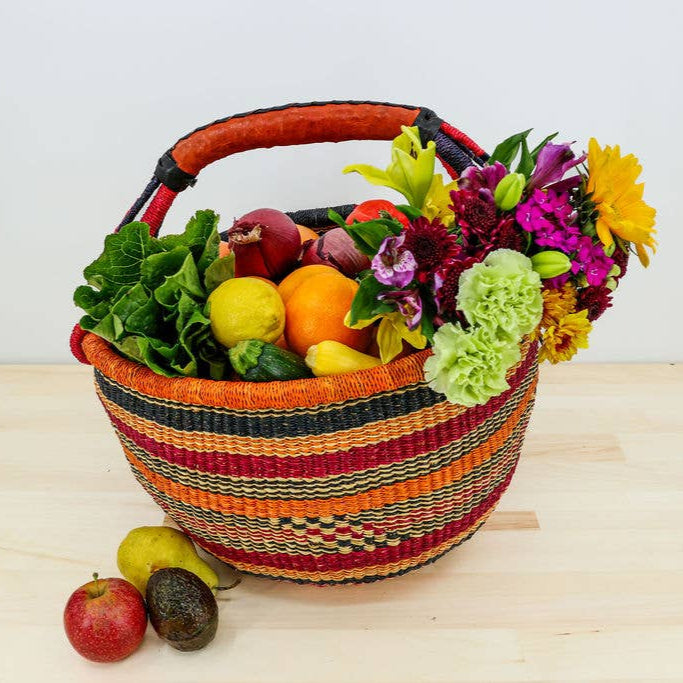
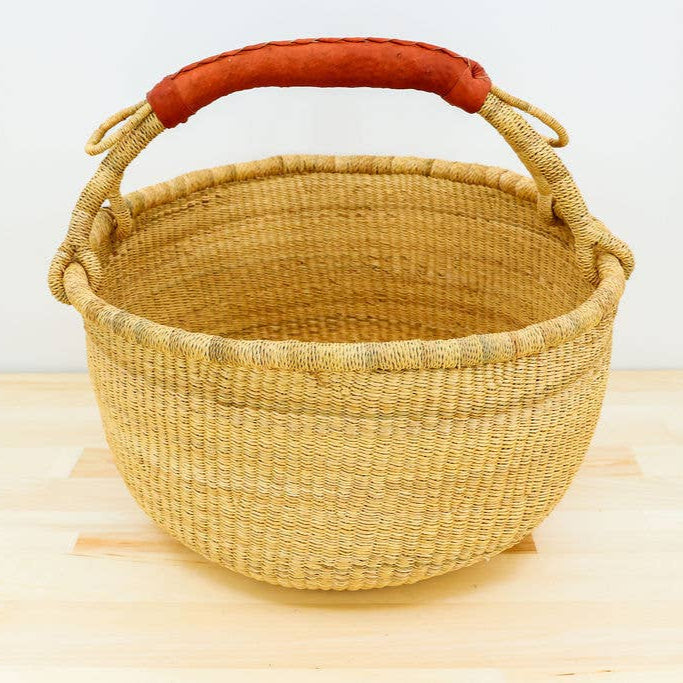
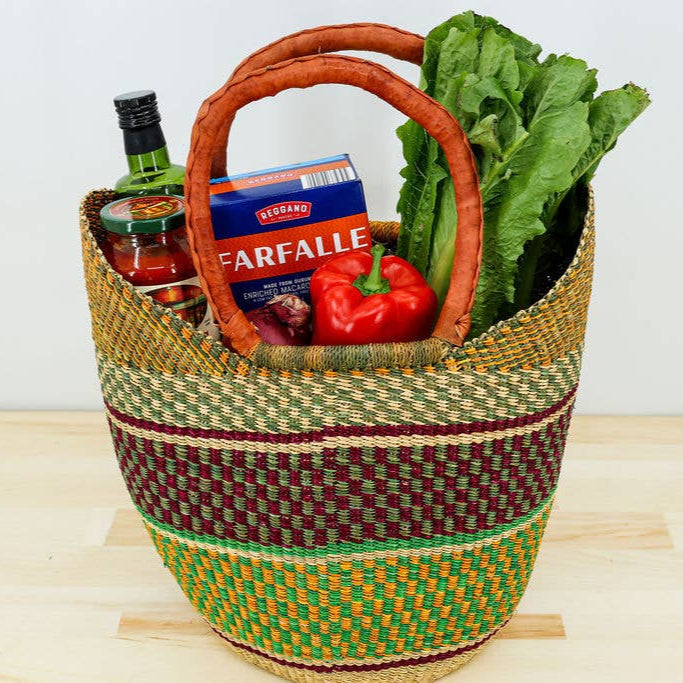
In Bolgatanga, Ghana, women artisans harvest and hand-twist kinkanhe grass, also known as elephant grass or vetiver, into durable, handwoven market baskets. This resilient natural fiber is prized for its strength and flexibility, making it ideal for baskets built to carry and last.
Raffia Palm – Uganda
In Mpigi, Uganda, women artisans gather raffia from their lush, swampy homeland and weave it into bold, sculptural designs. Raffia is a renewable palm fiber known for its lightweight durability and natural texture, used to create handwoven fruit bowls, placemats, and wall décor with striking visual impact.
Sisal – Kenya
In the semi-arid regions of Kitui and Taveta, Kenya, women artisans work with sisal, a hardy, drought-resistant plant fiber, to create strong, reusable tote bags. Sisal is valued for its sustainability, durability, and minimal environmental impact, making it a long-lasting alternative to synthetic materials.
Sweetgrass – Senegal
In Thiès, Senegal, women artisans weave locally harvested sweetgrass and wrap it with recycled plastic to create vibrant, environmentally friendly bowls and storage pieces. Sweetgrass is renewable and biodegradable, while the recycled plastic adds structure, strength, and colorful patterning, turning waste into functional art.
Banana Leaf – East Africa
Banana leaf is a renewable plant material commonly found throughout East Africa. When dried and woven, it becomes a durable fiber used in artisan crafts and décor. Its availability and fast regrowth make it a sustainable material choice rooted in traditional resourcefulness.
Palm Leaf – East Africa
Palm leaf is another natural fiber used as a sustainable alternative to single-use plastic. Biodegradable and compostable, palm leaf breaks down naturally without releasing harmful chemicals, making it a planet-friendly material for long-lasting woven goods.